












SEO » eCommerce SEO

eCommerce SEO Perth

Award-winning eCommerce SEO experts

Our award-winning experts deliver eCommerce SEO in Perth that strengthens your product and category content, improves commercial search relevance, and removes the technical and structural barriers stopping your store from ranking and converting.

Online Flooring Store category page after eCommerce SEO
Search Engine Land winner badge 2025
Global Digital Excellence Awards 2025 winner badge
Global Search Awards winner badge
APAC Search Awards winner badge

Our eCommerce SEO services

  • Turn product views into sales

    We enhance product titles, metadata, structured content, and internal linking to match high-intent search behaviour. This increases visibility for commercial keywords and removes friction in the customer journey, helping more shoppers convert.

  • Maximise your ranking potential

    Your category pages carry the most ranking power. We ensure your ranking potential is maximised through category optimisation and expansion, filters, faceted navigation, and contextual content so Google can interpret your range clearly and customers can find products with less effort.

  • Build a scalable store structure

    We optimise your full site layout, URL structure, navigation pathways, internal linking, and crawl depth. This helps search engines crawl efficiently, strengthens topical relevance, and guides users smoothly from discovery to checkout.

  • Create a faster, cleaner site

    We resolve crawl issues, indexation gaps, duplicate content, JavaScript rendering problems, and schema errors. The result is a fast, stable, search-friendly store that performs better for both bots and buyers.

  • Increase authority and trust

    We help your store earn high-quality mentions and links through authoritative content, brand positioning, and natural link acquisition. This builds domain authority, increases visibility for competitive terms, and strengthens long-term ranking stability.

  • Improve shopper experience flow

    We refine navigation, visual hierarchy, button placement, product discovery elements, and mobile responsiveness to reduce friction and boost engagement. A smoother UX keeps shoppers on site longer and supports higher conversion rates across both category and product pages.

  • Increase sales, not traffic

    We refine your page layouts, CTAs, messaging hierarchy, and trust elements to increase conversions without increasing traffic. This includes repositioning value statements, improving CTA clarity, reducing friction, and ensuring that your on-page content guides users toward taking action. CRO transforms your organic traffic into measurable business results.

  • Attract ready-to-buy customers

    We build buying guides, collection hubs, FAQs, and blog content that targets transactional intent. This positions your brand as the expert and drives users deeper into your product ecosystem.

  • Optimise product listings for success

    We manage and optimise your Google Merchant Centre account, ensuring that your product listings are correctly configured for Google Shopping ads and organic search. From feed setup to custom attributes and data optimisation, we help maximise your visibility and performance in Google’s shopping ecosystem.

  • Drive organic visibility for products

    Our eCommerce SEO services ensure your products rank highly in organic search without relying on paid ads. By optimising your product titles, descriptions, images, and schema, we enhance your product listings' discoverability, driving traffic and conversions with long-term, sustainable results.

Blue shape graphic
Specialists from our SEM agency in Perth holding awards to demonstrate the quality of our work

Why choose our SEO agency in Perth?

  • Perth’s most award-winning small SEO agency: Recognised by major institutions including Search Engine Land, Global Search Awards, and Global Digital Excellence Awards for excellence in search marketing.

  • Direct access to your SEO specialist: You work one-on-one with experts who have transformed complex online stores into industry-leading growth engines, including brands like Super Bock and Kitchen Warehouse.

  • No long-term lock-in contracts: Our partnerships begin with a 6-month sprint to build traction, then move to a flexible month-to-month arrangement you can cancel anytime. SEO is a marathon, but this sprint gets you up and running fast.

eCommerce SEO case study

blue-line.svg

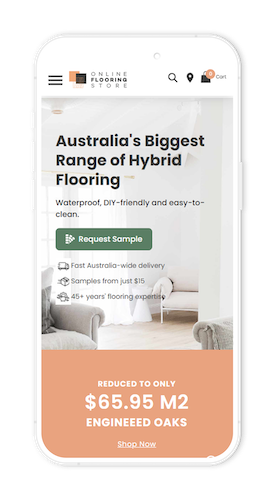
Online Flooring Store, an Australian-owned e-commerce flooring retailer, partnered with us to overhaul its UX, site structure, SEO strategy. The difference we made was night and day.

Online Flooring Store mobile website
orange-arrow.svg
online sales
0 %
orange-arrow.svg
online traffic
0 %
orange-arrow.svg
page views
0 %

What our clients are saying

Google logo
103 GOOGLE REVIEWS
5 Yellow star iconYellow star iconYellow star iconYellow star iconYellow star icon

100+ 5 star reviews

Avatar

Jana Perkins

Star icon Star icon Star icon Star icon Star icon

11/12/2025

For any small business, strong online presence is crucial in today's competitive market. After almost a year working with Brad and team at Digital Hitmen, I can confidently say they have been an invaluable part of our growth @Skin Culture Perth. The team is professional, reliable and most importantly results driven, helped me to reach more clients, build up our brand and stand out online. For any small business looking to grow and succeed online I can't recommend Digital Hitmen highly enough!

Read more

Avatar

Adrian Rossiter

Star icon Star icon Star icon Star icon Star icon

20/09/2025

Digital Hitmen have worked with us consistently over the past year in the highly technical field of optometry and allied health. In that time, our organic web traffic has doubled, and direct enquiries for the specialised services that we offer have increased significantly. We are impressed with their results, in particular, the tireless work ethic and expertise of our SEO executive, Ghazy Aziz.

Read more

Avatar

Alex Foster

Star icon Star icon Star icon Star icon Star icon

17/09/2025

The crew at Digital Hitmen have been great. Always happy to assist us with updates and changes, and it's been amazing the traction Brad and Ghazy have been able to generate for our brand.

Avatar

Alan Peters

Star icon Star icon Star icon Star icon Star icon

06/08/2025

Attended a SEO Masterclass presented by Brad, very educational. Brad is clearly an expert in this field! Thanks Brad !

Avatar

David Hewson

Star icon Star icon Star icon Star icon Star icon

14/07/2025

Matt has been great to work with. His expertise and attention to detail have helped our business grow over time. after trying multiple other marketing companies with poor results I would recommend Digital Hitmen

Read more

Avatar

David Hewson

Star icon Star icon Star icon Star icon Star icon

17/06/2025

Matt has been great to work with. His expertise and attention to detail have helped our business grow over time. after trying multiple other marketing companies with poor results I would recommend Digital Hitmen

Read more

Angle left
Angle right
close

Star icon Star icon Star icon Star icon Star icon

The benefits of eCommerce SEO

eCommerce SEO brings more high-intent shoppers to your store without relying on paid ads. By improving visibility for commercial keywords, you attract customers who are already ready to buy, increasing revenue sustainably.

When your products rank naturally, you rely less on expensive paid channels. Strong SEO reduces cost per acquisition over time and stabilises your marketing spend, giving you a predictable flow of customers.

SEO improvements such as faster load times, clearer page structure, stronger navigation, and refined content make your store easier to use. A smoother experience keeps customers browsing longer and reduces drop-offs.

High rankings for competitive product and category terms positions your store as a trusted option in your market. Consistent visibility builds credibility and helps customers choose you over similar retailers.

SEO refines everything from product information to category structures to the placement of “buy now” buttons. This clarity helps customers understand your offer faster, removes friction, and increases add-to-cart and checkout completion rates, regardless of how they arrive.

While ads are great (and ideally partnered with SEO), only SEO compounds. As your site architecture, content, and authority grow, your rankings strengthen across thousands of product and category pages, creating a scalable foundation for future growth.

How does eCommerce SEO work?

  • We start by understanding your market, your products, and how your customers actually search.

    Business and product analysis

    • Review your product range, margins, hero SKUs, and key categories.
    • Identify priority products and categories where ranking will have the highest commercial impact.

    Keyword and intent research

    • Build keyword sets for products, categories, brands, comparisons, and buying guides.
    • Separate informational, commercial and transactional intent terms so the right pages target the right queries.
    • Map “money” keywords to categories and products, and support them with long tail and question-based queries.

    SERP and competitor analysis

    • Analyse the current results for your target keywords, including marketplaces like Amazon and big retailers.
    • Review competitor category and product page layouts, content depth, filters, and UX patterns.
    • Benchmark their backlink profiles, internal linking, and schema usage to find gaps and opportunities.

    Customer behaviour and data insights

    • Use Analytics, Search Console and in-platform search data to see what people already look for on your site.
    • Identify search terms that drive sales, not just traffic, and prioritise those in the strategy.
    • Review device mix, locations, and new vs returning visitor behaviour to guide content and UX decisions.

    Content and category gap analysis

    • Identify missing categories, thin product descriptions, and topics where guides or FAQs would support conversions.
    • Plan topic clusters and buying guides that can feed authority into your key commercial pages.
  • The audit stage uncovers everything blocking your store from ranking, being crawled, or converting properly.

    Technical health audit

    • Check site speed, Core Web Vitals, crawlability, indexation, mobile usability, and HTTPS.
    • Identify duplicate content, parameter issues, canonical problems, and pagination errors.
    • Review XML sitemaps, robots.txt, redirects, 404s, JS rendering, and how search engines see key templates.

    Site architecture and internal linking audit

    • Map your full URL structure, category hierarchy, and depth from the homepage.
    • Flag orphaned or buried categories and products that sit too far from crawl paths.
    • Review breadcrumb logic, mega menu structure, filters, and internal linking patterns across templates.

    Category and product template review

    • Evaluate category pages for content depth, unique text, filters, and sort options that support both SEO and UX.
    • Review product pages for structured information, specifications, images, FAQs, reviews and trust signals.
    • Check for duplicate or near-identical content across variants and regional versions.

    Content quality and EEAT review

    • Assess whether content demonstrates expertise and trust, particularly for higher ticket or specialised products.
    • Evaluate tone, depth, accuracy, and helpfulness, not just keyword usage.
    • Check whether author, brand story, returns, shipping, guarantees, and support policies are clear and credible.

    Schema and rich result audit

    • Audit existing structured data for Product, Breadcrumb, FAQ, Review, Organisation and LocalBusiness where relevant.
    • Identify missing schemas that could unlock rich results such as price, availability, ratings, and FAQs in search.
    • Validate current markup, fix errors and remove conflicting or spammy implementation.

    Off-page and authority review

    • Review backlink profile quality, relevance, and anchor text distribution.
    • Identify natural link magnets such as guides, tools, or resources, and where more can be created.
    • Flag toxic links or historic link schemes that may need disavowal or risk management.

    Analytics and tracking audit

    • Confirm correct configuration of Analytics, Search Console and eCommerce tracking.
    • Check that key events such as add-to-cart, checkout steps, and transactions are tracked accurately.
    • Ensure attribution and UTM structures support clean analysis of SEO performance.
  • This is where we turn the strategy into live changes across your store.

    Technical fixes and enhancements

    • Implement speed optimisations, image compression, code minification and caching.
    • Fix crawl errors, improve internal redirects, set correct canonicals, and clean up duplicate URLs.
    • Refine XML sitemaps and robots rules so search engines focus on money pages, not junk.

    Site and category architecture improvements

    • Restructure categories and subcategories to match how customers actually shop.
    • Simplify and standardise URL patterns, ensuring they are clean, descriptive, and stable.
    • Improve navigation, breadcrumbs, and internal linking so authority flows from top-level pages into key categories and products.

    On-page optimisation at scale

    • Optimise titles, meta descriptions, H1s and on-page headings for product, category and content templates.
    • Roll out improved copy for category intros, collection descriptions, and supporting text that targets specific intent.
    • Enhance product descriptions, specs, bullets, and supporting content to improve both relevance and conversions.

    UX and CRO enhancements

    • Refine page layouts, visual hierarchy, and key call to action placements.
    • Improve product discovery elements such as filters, search, related products, and navigational cues.
    • Clarify shipping, returns, guarantees, and payment options to reduce friction and cart abandonment.

    Content creation and frameworks

    • Build buying guides, comparison pages, FAQs and blog content to support commercial pages and answer common objections.
    • Create topic clusters around core product themes, linking them back to the main category and product pages.
    • Update and consolidate thin or overlapping content to strengthen topical authority and avoid cannibalisation.

    Schema deployment and GEO considerations

    • Implement or refine structured data for Product, Breadcrumb, FAQ, Review, Organisation, and LocalBusiness.
    • Structure content and markup in a way that supports both traditional SERPs and AI-driven search experiences.
    • Ensure pricing, availability, ratings, and FAQs are communicated clearly in your markup to improve rich result eligibility.

    Off-page and authority building

    • Promote high-value content and linkable assets to relevant publishers and partners.
    • Encourage natural mentions and links through PR, partnerships, and community activity, not paid link schemes.
    • Support brand search growth and reputation through consistent messaging and review generation.
  • Measurement closes the loop and guides continuous improvement.

    Core SEO KPIs

    • Track organic sessions, revenue, orders, and average order value from non-paid traffic.
    • Monitor rankings for priority category, product, and topic cluster keywords.
    • Measure share of visibility against key competitors across your main keyword sets.

    Behaviour and funnel analysis

    • Analyse landing pages, bounce rates, time on page, scroll depth, and exit rates to find friction points.
    • Review add-to-cart rates, checkout funnel drop-offs, and abandonment patterns for organic traffic.
    • Segment by device, location, and new vs returning users to uncover specific UX or performance issues.

    Template and segment performance

    • Compare performance across templates, for example, category pages vs product pages vs buying guides.
    • Identify categories or brands where SEO is driving strong returns and where further investment is justified.
    • Monitor how newly optimised collections and products perform compared to legacy sections.

    Technical and crawl monitoring

    • Use Search Console and crawl tools to watch for new errors, coverage issues, and indexation changes.
    • Track Core Web Vitals and site speed over time, especially after design or app changes.
    • Ensure new products, categories, and content are being discovered and indexed as expected.

    Attribution and ROI reporting

    • Tie organic performance back to real revenue, not just clicks and rankings.
    • Report on lifetime value and repeat purchase behaviour from organic cohorts where data allows.
    • Use this insight to prioritise future SEO work on the products, categories, and regions that generate the best return.

    Ongoing optimisation loop

    • Feed learnings from measurement back into research, audit, and implementation.
    • Refresh content, refine internal links, test new UX patterns, and expand into new keyword sets.
    • Adjust the strategy as your catalogue, competition, and search behaviour evolve, keeping your eCommerce SEO compound and not stagnate.

How much does SEO cost?

eCommerce SEO pricing isn’t one-size-fits-all. We offer packages based on hours because every website is unique. This model ensures your strategy remains flexible, scalable, and responsive to the specific needs of your site, rather than locking you into a rigid plan.

Standard tier

$2,000/mo
12 hours per month

Medium tier

$4,000/mo
25 hours per month

High tier

$7,500/mo
50 hours per month

Standard tier

$2,000/mo
10 hours per month

Medium tier

$4,000/mo
20 hours per month

High tier

$8,000/mo
40 hours per month

Orange line graphic
Orange shape graphic

Platforms we work with

  • WooCommerce (via WordPress) is our recommended eCommerce platform because it delivers the best balance of flexibility, SEO control and long-term scalability. It allows full customisation of URL structures, product templates, content frameworks, schema, and technical SEO, giving you complete control over how your store grows. For businesses that rely on organic search and need a platform that adapts to their operations rather than restricting them, WooCommerce consistently outperforms template-based alternatives.
  • Shopify is a strong choice for retailers who want a stable, user-friendly platform and fast time-to-market. We work extensively with Shopify and understand how to overcome its structural limitations, including rigid URL paths, constrained canonical control, limited filtering options and template-level schema restrictions. With the right setup, Shopify can deliver excellent results, but for highly complex catalogues or stores that rely heavily on organic search flexibility, WooCommerce often remains the superior long-term option.

  • Adobe Commerce, formerly Magento, is built for enterprise-level eCommerce. It provides unmatched extensibility for large catalogues, advanced inventory logic, complex integrations, and multi-store environments. However, it requires ongoing developer involvement and infrastructure investment. We work with Adobe Commerce stores that need sophisticated SEO strategy layered over custom architecture, ensuring performance remains strong despite the platform’s technical overhead.

  • Wix is usually suitable for very small eCommerce stores with simple needs, low SKU counts and minimal SEO goals. The platform’s flexibility is limited, particularly around speed, URL control, structured data, and category hierarchy. We work with Wix sites when appropriate, but as soon as the business grows or SEO becomes a core acquisition channel, we usually recommend migrating to WooCommerce for greater control and scalability.

  • Squarespace supports small, design-focused stores where aesthetics matter more than advanced eCommerce functionality. While we can optimise Squarespace, it has clear limitations with filtering, structured data, page speed and large-category management. It works for boutique brands, but once the store expands or requires deeper SEO capability, migrating to WooCommerce is almost always the logical next step.

Digital Hitmen team holding SEM and SEM awards to demonstrate the quantity and quality of them

About our SEO agency in Perth

Founded in 2016, Digital Hitmen has grown into the most award-winning SEO agency in Perth, with recognition from global organisations such as the Global Search Awards, Global Digital Excellence Awards, and Search Engine Land Awards.

Our boutique offerings focus on SEO, PPC, and web design strategies that drive measurable growth and are delivered by SEO specialists with the future in mind, not just the present.

Whether you’re a local business looking to dominate your area or an eCommerce brand targeting growth across Australia, we have the expertise, tools, and proven results to help you outperform competitors and achieve long-term success.

eCommerce SEO guide

eCommerce SEO is the process of improving the visibility of your online store in search engines so more customers can find and buy your products. It involves optimising product pages, category structures, site speed, content, internal linking, technical health and user experience. The goal is simple: attract high-intent shoppers and convert them into sales without relying solely on paid ads.

SEO is essential for eCommerce because most shoppers begin their buying journey on Google. If your products and categories don’t appear when people search, competitors take the sale. Strong SEO reduces acquisition costs, increases organic revenue, improves site usability and gives your brand long-term visibility that compounds over time.

WooCommerce is the strongest platform for SEO because it gives you complete control over URLs, content, schema, technical setup, and category structure. Shopify can also perform well, but it has limitations in URL flexibility, canonical logic and template customisation. Platforms like Wix and Squarespace suit very small stores but become restrictive as SEO and catalogue complexity grow. Adobe Commerce (formerly Magento) is powerful for enterprise retailers with development resources in place.

Most eCommerce businesses benefit from both. SEO builds long-term, low-cost traffic and strengthens your site’s authority, while PPC provides immediate visibility, product testing opportunities and fast sales. Together they create a balanced acquisition strategy: PPC captures quick wins, and SEO reduces reliance on paid channels over time.

Effective eCommerce SEO requires a structured approach: detailed keyword and competitor research, technical auditing, fixing crawl and index issues, improving site architecture, optimising categories and product pages, enhancing UX, implementing schema, creating supporting content such as buying guides, and building authority through high-quality off-page signals. Each part must work together to drive rankings and conversions.

Start by improving core foundations: speed, mobile performance, URL structure and internal linking. Strengthen and expand your category pages with targeted keywords and useful content, and enrich product pages with detailed information, specifications, images and FAQs. Fix duplicate content issues, streamline navigation, refine schema markup, and build content clusters that support commercial pages. Continuous measurement and iteration is key as your catalogue and competition evolve.

You’ll receive a custom SEO report every month. These reports pull data from SEMrush, Google Analytics, Google Search Console, and Google Lighthouse, with all the insights compiled through Agency Analytics. Each report is designed around your business goals, so you see exactly what’s working, where improvements are happening, and what the next priorities are.

We structure campaigns to use most of your allocated hours each month, with a small buffer set aside for specific client requests or urgent needs. Any unused buffer hours don’t roll over to the next month.

No. However, SEO work involves a lot of behind-the-scenes activity, and we operate from an approved strategy to keep campaigns moving forward, so if you’re too busy to check in, we continue implementing actions that drive results. 

Blue shape graphic

Let’s work together

Tell us about your online business goals. Fill in the form or give us a call on 1300 615 252.

Want to grow
your business?

Calculate your
marketing budget

Annual revenue ($)
Do you sell products or services?
Do you sell to other businesses or to a final consumer?
What percentage of your annual revenue is generated online?

Show marketing budget as: